


22+ Years of Experience
Installation, oversight and business development inform the work.
Jacksonville Septic Solutions is the #1 septic in Jacksonville, NC. We handle septic pumping, septic cleaning, septic inspections, tank repairs, septic installation or replacement, and drain field services for residential and commercial properties across greater Jacksonville.
We have over 22 years of experience handling installation, oversight, and business development. It is important to start with the cause, then choose the right service for your property. Onslow County soil, seasonal groundwater and the approved layout shape the plan. Service life depends on the product, site and maintenance.
Installation, oversight and business development inform the work.
Separate plumbing, tank, equipment and field problems.
Check soil, approved bedrooms and permit requirements.
Understand access, proposed work and starting prices.
Match the service to property use and wastewater needs.
Connect today’s service with the right ongoing care.
Start with the service that matches your need. If you are unsure, describe the symptoms.
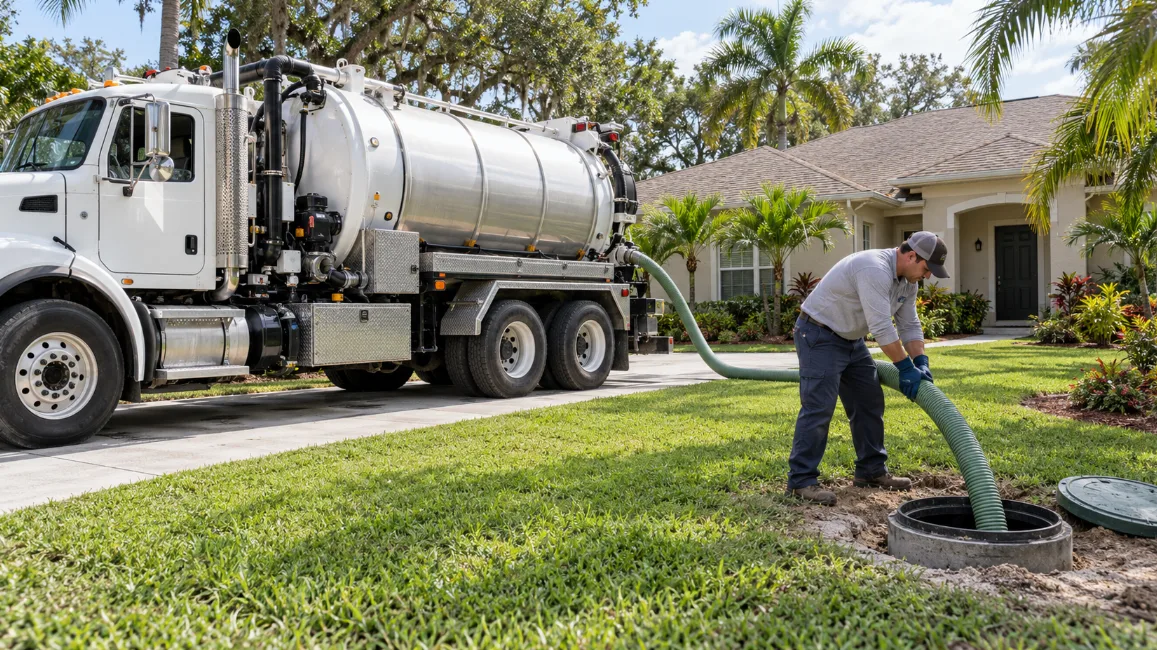
Routine care, a recurring backup or a new system: each starts with a clear scope and the property’s actual needs.
Remove accumulated solids from the tank. Confirm actual capacity, compartments and access. Recurring backups need a diagnosis beyond another pump-out.
Explore Septic ServiceClean accessible deposits, filters and components when needed. Separate pumping from wash-down or deep cleaning. Agree on scope before service.
Explore Septic ServiceReview records, tank condition and accessible components. Real estate inspections help buyers understand the system. A condition report is different from agency approval.
Explore Septic ServiceLocate a leak, broken fitting, restricted filter or equipment fault. Separate component repair from structural failure. Review the permit path before work.
Explore Septic ServiceCheck soil, approved bedrooms, groundwater and sewer availability. Choose the permitted system before excavation. Keep the future repair area available.
Explore Septic ServiceRequest help for backups, overflow or a high-level alarm. Describe symptoms and recent rain. Service availability is confirmed; the form is not dispatch.
Explore Septic Service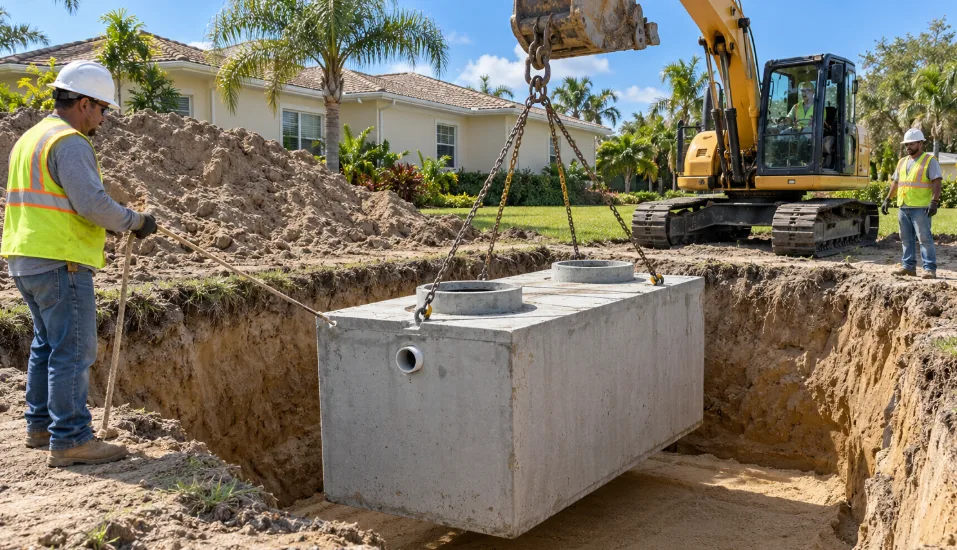
A tank can be sound while the field struggles. Review distribution, soil and groundwater before deciding on repair or replacement.
Separate damaged pipes or distribution equipment from soil failure. Match repairs to the approved scope. Aeration is not a universal cure.
Explore Drain Field ServiceInvestigate wet spots, odors and recurring backups. Review the layout, accessible distribution and recent weather. A dry lawn is not proof of performance.
Explore Drain Field ServiceReplace a field that cannot function adequately. Evaluate soil, groundwater, approved demand and repair space. Define whether the existing tank can remain.
Explore Drain Field ServiceStart with the floor plan, system record, sewer availability and site conditions before choosing a tank or replacement field.
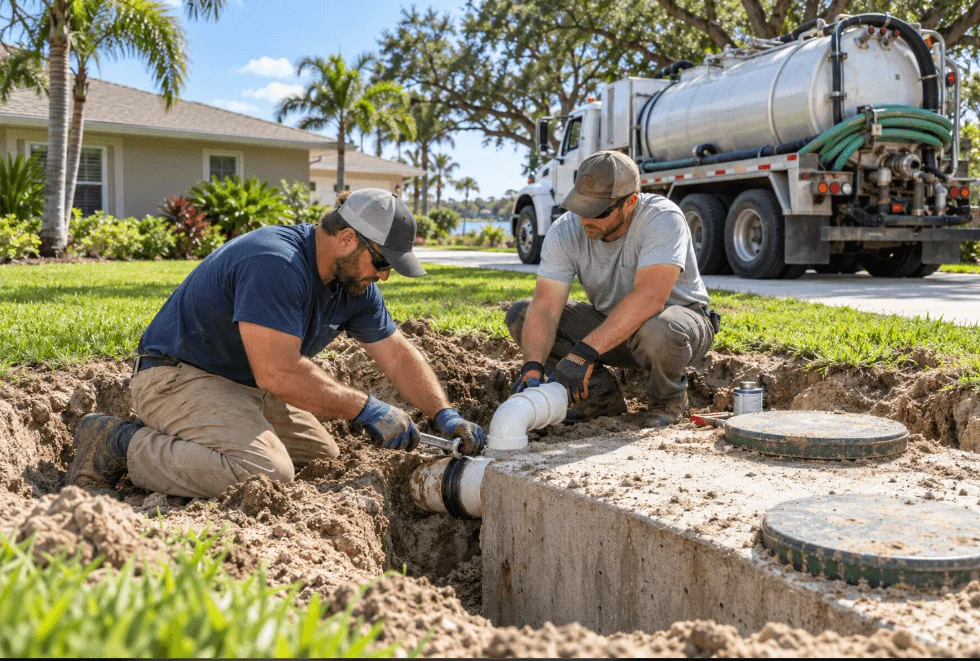
The home-size figure is a county listing median, not a citywide or septic-only average. A three-bedroom example starts at 360 gallons/day and a 1,000-gallon tank minimum. Actual permit, occupancy and system design govern.
Prepare the application, map or plat, proposed layout and marked property corners. The standard county route is soil evaluation, Improvement Permit, Construction Authorization, inspection and Operation Permit. Repairs and additions need the right review path.
What looks like a tank failure can start in the drain field, the plumbing or the way the property uses water.
Missed pumping or filter care can let solids escape.
Leaks and heavy use can exceed the approved demand.
These block flow and can disrupt treatment.
Seasonal groundwater can limit drainage and treatment.
Roots damage pipes; loads compact soil or crush parts.
Pump faults and unreviewed bedrooms can affect performance.
A septic system is more than a tank. Its storage capacity, treatment process and drain field each do a different job. Use this guide to understand home size, tank materials, expected lifespan and Jacksonville conditions before choosing a service.
Onslow County listed homes had a 1,735 sq ft median in September 2026. That is county listing data, not the average of every Jacksonville home or a septic-only survey.
A roughly 1,700 sq ft, three-bedroom home is a useful example. Standard design flow starts at 360 gallons/day; ordinary tank storage starts at 1,000 gallons. Floor area alone does not size the system.
| Bedrooms | Standard design flow | Minimum tank storage |
|---|---|---|
| 3 | 360 gallons/day | 1,000 gallons |
| 4 | 480 gallons/day | 1,000 gallons |
| 5 | 600 gallons/day | 1,250 gallons |
Standard residential design flow starts at 120 gallons/day per bedroom. Higher occupancy and special designs can change these figures. A 1,000-gallon tank does not mean the field accepts 1,000 gallons each day. Confirm the approved bedrooms, use and actual installed components.
Heavy and rigid. Inspect walls, lids and seams. Lifting access and a stable base matter.
Lightweight composite. Check the shell and fittings. Follow approved support and anchoring details.
Molded plastic. Correct backfill and burial depth help prevent movement or deformation.
Concrete tanks are widely used in North Carolina. Lightweight alternatives need approved installation details. Tank shells, fields, pumps and controls age differently; service life depends on the product, site and care.
Liquid flows to suitable soil through trenches. Approved gravel-less chambers or aggregate products may replace gravel.
A pump doses low-pressure pipe or other approved fields. Floats, alarms and distribution need maintenance.
Approved drip, aerobic or filter systems can suit specific sites. Treatment, dispersal and ongoing management are separate parts of the design.
Onslow’s application lists conventional, chamber, low-pressure pipe, drip, aerobic and filter options. That menu is not proof every option is suitable for your lot. Soil evaluation and the approved permit decide.
Show structures, driveways, wells, water lines and drainage. Waterfront lots may need established CAMA lines. Protect the future repair area.
Allow 4–6 business days as an initial complete-application planning allowance. This is not a measured Onslow County review queue or a guaranteed approval. Lot preparation, soil evaluation, design, missing documents and workload can extend the schedule. Confirm the current timeline before setting an installation date.
NC law discusses completed-application improvement-permit decisions within 60 days for conventional/accepted systems and 90 days for provisional/innovative systems in its agency-accountability provision. These are separate from our planning allowance and are not guaranteed installation dates.
Onslow requires a permit to fix a malfunctioning system. Its current repair page lists no agency application fee; contractor work still costs money. An addition without new bedrooms may need Existing System Authorization. Added bedrooms or relocation can require a new IP/CA review.
A local “perc test” is a soil-and-site evaluation. Soil layers, wetness, slope, setbacks and usable area matter. Nearby lots can need different systems.
NOAA’s Jacksonville EOC station averages 58.90 inches of yearly rain in the 1991–2020 normals. Storm saturation can limit field drainage. Reduce water use and have flooded conditions assessed before pumping.
The city, ONWASA and other utilities serve different addresses. An ONWASA water bill does not prove ONWASA sewer service. Confirm the exact lot before investing in septic replacement.
After an outage, check alarms and controls using the system instructions. A pump fault is different from a failed field. Follow the permit’s maintenance and operator requirements.
Practical answers for Jacksonville homes and businesses.
Ordinary single dwellings generally start at 1,000 gallons through four bedrooms and 1,250 gallons at five. Check the installed permit and any special design.
Onslow calls it a soil evaluation. Soil layers, wetness, slope, setbacks and usable field area determine suitability.
The site evaluation and approved permit decide. Conventional, pressure, drip and advanced treatment options have different requirements.
Yes. Onslow’s repair process includes an application, site evaluation and approved repair plan.
No. ONWASA provides water over a wider area than sewer. Confirm the actual wastewater provider and connection.
Allow 4–6 business days as an initial complete-application planning allowance. This is not a measured Onslow County review queue or a guaranteed approval. Lot preparation, soil evaluation, design, missing documents and workload can extend the schedule. Confirm the current timeline before setting an installation date.
Yes. Existing System Authorization or new IP/CA review may be needed, especially for extra bedrooms or relocation.
Tank, field and equipment age differently. Product, installation, site conditions and maintenance affect service life.
Yes. Share the business use, wastewater type and access details so the service scope can be reviewed.
Tell us where you are, what is happening and the service you need.